Table of Contents
Throughout history, humanity has pushed the boundaries of what's physically possible, creating structures that inspire awe, serve vital functions, and stand as monuments to our collective ingenuity. These engineering marvels—from ancient walls that have endured millennia to modern skyscrapers piercing clouds—represent far more than steel, concrete, and stone. They embody the vision of architects and engineers who dared to imagine the impossible, the determination of workers who brought those visions to life, and the problem-solving brilliance required to overcome seemingly insurmountable obstacles.
Engineering structures tell stories about the civilizations that built them: their values, their technological capabilities, their ambitions, and their understanding of the natural world. They transform landscapes, connect separated regions, harness natural forces, and sometimes simply demonstrate that humans can build something beautiful and permanent in an impermanent world. These monuments to human achievement continue inspiring us because they represent not just technical accomplishment but the fundamental human drive to create, to connect, and to leave something meaningful for future generations.
This comprehensive exploration examines the world's most impressive engineering structures, analyzing not just their physical characteristics but the challenges overcome during construction, the innovations they pioneered, their impact on society, and what makes them genuinely extraordinary examples of human capability.
Burj Khalifa: Redefining the Limits of Vertical Construction
Dubai, United Arab Emirates
Rising 2,717 feet (828 meters) above the Dubai desert, the Burj Khalifa doesn't just claim the title of world's tallest building—it obliterates previous height records. When completed in 2010, it stood nearly 200 feet taller than its nearest competitor, claiming not just the tallest building crown but also the tallest free-standing structure, highest occupied floor, and highest outdoor observation deck. The tower's 163 floors contain residences, corporate offices, restaurants, and the Armani Hotel, making it a vertical city rather than merely a building.
Engineering Challenges and Solutions
Building to such unprecedented heights required solving problems no structure had previously faced. At extreme heights, wind forces become exponentially more powerful and complex. The Burj Khalifa's distinctive Y-shaped floor plan, inspired by the regional Hymenocallis flower, isn't merely aesthetic—it reduces wind forces by confusing airflow and preventing organized vortex formation that could set up destructive oscillations. Wind tunnel testing involving over 40 different studies refined the design to ensure stability while minimizing material use.
Structural system innovations were equally critical. The tower uses a "buttressed core" design where a central hexagonal core connects to three wing structures, each buttressed by its own concrete core. As the building rises, these wings step back in a spiraling pattern, reducing mass and wind resistance at higher elevations while maintaining structural integrity. This system distributes loads efficiently while providing exceptional resistance to twisting forces that become pronounced in supertall structures.
The concrete mixture itself represented a materials science achievement. Desert temperatures regularly exceed 100°F (38°C), and pouring concrete in such heat risks premature curing that weakens the structure. Engineers developed a special concrete mix incorporating ice and chilled water, poured primarily at night when temperatures dropped. The concrete included additives that delayed setting time, allowing proper placement before hardening. Final concrete strength exceeded 14,500 psi (pounds per square inch)—roughly three times stronger than typical concrete—necessary to support the enormous compressive loads at the base of such a tall structure.
The Great Wall of China: Ancient Engineering on an Unprecedented Scale
Northern China
Stretching approximately 13,170 miles (21,196 kilometers) across mountains, plateaus, and deserts, the Great Wall of China represents the largest construction project in human history. Built incrementally over more than two millennia, with major construction periods during the Qin Dynasty (221-206 BCE) and Ming Dynasty (1368-1644 CE), the wall showcases how persistent effort and organizational capability can achieve what seems impossible through individual projects.
Construction Across Diverse Terrain
The Great Wall's engineering brilliance lies not in technological sophistication but in adapting construction to wildly varying geography and available materials. In mountainous regions, builders positioned walls along ridge lines, using natural topography for defensive advantage while minimizing required material. Steep slopes necessitated strong foundations and drainage systems preventing water accumulation that would undermine walls.
Material selection varied by region and era. Early sections used rammed earth—layers of soil, gravel, and sand compacted through repeated pounding—creating surprisingly durable walls still visible today. Ming Dynasty sections employed fired bricks and cut stone blocks, providing superior durability but requiring massive quarrying, brick-firing, and transportation efforts. In desert regions where neither stone nor suitable soil existed, builders used whatever materials were available, including bundles of willow branches.
Labor organization represented an administrative and logistical achievement as impressive as the physical construction. At peak periods, hundreds of thousands of workers—soldiers, peasants, and prisoners—labored simultaneously on different sections. Coordinating such massive workforces required sophisticated supply chains delivering food, tools, and materials across vast distances to remote construction sites.
The Channel Tunnel: Connecting Nations Beneath the Sea
United Kingdom and France
The Channel Tunnel, or "Chunnel," connects Folkestone, England, with Coquelles, France, through 31.4 miles (50.5 kilometers) of tunnel beneath the English Channel, including 23.5 miles (37.9 kilometers) underwater—making it one of the longest undersea tunnels globally. Opened in 1994 after six years of construction, the tunnel realizes a vision discussed for over two centuries but deemed impossible until modern tunnel boring technology matured.
Geological and Engineering Obstacles
Digging beneath one of the world's busiest shipping lanes while managing water pressure, variable geology, and international coordination presented extraordinary challenges. Engineers selected a route through a layer of chalk marl—relatively impermeable sedimentary rock providing stable tunneling conditions while minimizing water infiltration. This geological layer, 40-50 meters below the seabed, offered the optimal balance of depth and engineering feasibility.
Tunnel boring machines (TBMs) revolutionized the project's feasibility. These massive machines, over 400 feet long weighing thousands of tons, excavated the tunnel while simultaneously installing concrete lining segments. Eleven TBMs worked simultaneously from both English and French sides, excavating three tunnels: two 25-foot diameter rail tunnels and one 16-foot service tunnel for maintenance and emergency evacuation. The machines advanced roughly 250 feet per day through favorable geology, though difficult sections slowed progress considerably.
Breakthrough precision demanded extraordinary surveying accuracy. Tunnels starting from opposite coasts needed to meet in the middle with millimeter precision despite traveling miles through rock without direct line of sight. Engineers used laser-based guidance systems, gyroscopic surveying instruments, and precise satellite positioning to maintain proper trajectory. When English and French crews finally met, the alignment error was less than 2 inches—a remarkable achievement given the distances and challenging conditions.
Panama Canal: Engineering Trade Routes and Reshaping Global Commerce
Panama
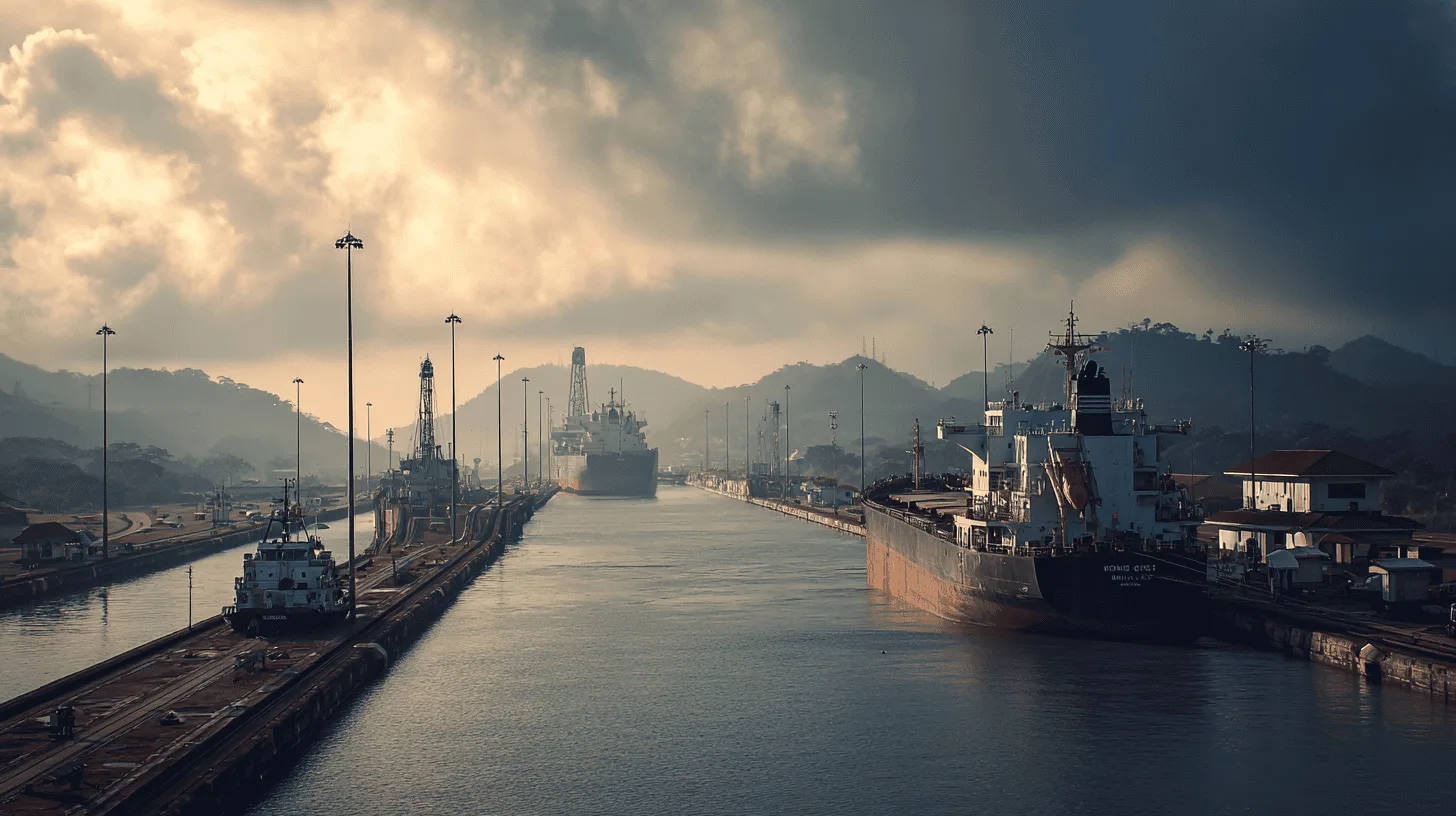
The Panama Canal ranks among history's most impactful engineering projects, cutting 8,000 miles off the sea journey between Atlantic and Pacific Oceans by providing a 51-mile shortcut through the Central American isthmus. Completed in 1914 after one of the most difficult construction projects ever attempted, the canal fundamentally altered global trade patterns, naval strategy, and geopolitics.
A Vision Nearly Abandoned
French engineer Ferdinand de Lesseps, famous for constructing the Suez Canal, initially attempted building a sea-level canal across Panama in 1881. The effort failed catastrophically, costing over 22,000 lives to disease—primarily yellow fever and malaria—and bankrupting the French company. The tropical climate, mountainous terrain, unstable geology, and torrential rainfall proved overwhelming for 1880s technology and medical understanding.
American efforts beginning in 1904 succeeded by fundamentally changing the approach. Rather than excavating to sea level, engineers designed a lock-based system raising ships 85 feet above sea level to cross the continental divide, then lowering them back to sea level. This approach required excavating far less material through the mountainous spine while providing stable water levels less affected by seasonal rainfall variations.
Lock engineering represented the project's greatest innovation. The canal includes three sets of paired locks: Gatún Locks (Atlantic side), Pedro Miguel Locks, and Miraflores Locks (Pacific side). Each lock chamber measures 110 feet wide by 1,050 feet long—enormous concrete basins that fill and drain using gravity flow from Gatún Lake. Ships enter chambers, massive steel gates close behind them, water fills or drains the chamber to match the next level, forward gates open, and ships proceed.
Golden Gate Bridge: Elegance and Resilience in a Challenging Environment
San Francisco, California, United States
Spanning the Golden Gate strait connecting San Francisco Bay to the Pacific Ocean, the Golden Gate Bridge stands as perhaps the world's most recognizable bridge. Completed in 1937 during the Great Depression, its 4,200-foot main span was the longest suspension span globally until 1964, while its total length of 1.7 miles made it an engineering landmark.
Overcoming Natural Obstacles
The bridge site presented formidable challenges: strong ocean currents flowing through the strait twice daily with tidal changes, persistent high winds accelerating through the narrow passage, frequent fog reducing visibility, deep water over 300 feet at the location requiring bridge tower foundations, and seismic activity from the nearby San Andreas Fault system.
Chief engineer Joseph Strauss initially proposed a hybrid cantilever-suspension design, but consulting engineers Irving Morrow and Charles Ellis refined it into the elegant suspension bridge built. The design's aerodynamics received intensive study following the 1940 Tacoma Narrows Bridge collapse. The Golden Gate's stiffening truss design and open roadway grating allow wind to pass through rather than creating lift forces that might induce dangerous oscillations.
Tower foundations required innovative underwater construction. The San Francisco tower foundation, built relatively close to shore, used a massive concrete fender protecting the construction site from waves while workers excavated to bedrock. The Marin County tower foundation, in deeper water with stronger currents, pushed construction technology limits. Engineers used explosive charges to remove unsuitable material, then constructed a massive concrete foundation underwater using specially formulated concrete that cured even when submerged.
Sydney Opera House: Sculptural Architecture Pushing Structural Boundaries
Sydney, Australia
The Sydney Opera House represents one of the 20th century's most daring architectural and structural achievements. Danish architect Jørn Utzon's winning competition design in 1957 proposed a building unlike anything previously constructed: a series of massive, interlocking shell structures suggesting billowing sails or seashells rising dramatically from Sydney Harbour.
Geometric and Structural Complexity
Utzon's original design presented shells with complex double-curved geometries that defied construction with available techniques. The shells weren't merely decorative—they formed the building's actual roof structure, requiring them to be both visually striking and structurally sound. Early attempts to rationalize the geometry for construction failed repeatedly, creating cost overruns and delays that nearly killed the project.
The breakthrough came when Utzon realized all shells could be constructed as segments of a single sphere. This "spherical solution" meant every shell section followed curves from a sphere 246 feet in diameter. This geometric consistency allowed each precast concrete rib to be cast using repeated formwork, dramatically reducing complexity and cost. The ribs, like slices of an orange, radiate from common centers and support precast roof panels creating the final shell surfaces.
Structural engineering by Ove Arup and Partners transformed Utzon's artistic vision into buildable reality. The shells aren't continuous surfaces but rather frameworks of precast concrete ribs supporting precast concrete panels covered in ceramic tiles. Each shell consists of multiple ribs, some weighing up to 15 tons, assembled using innovative post-tensioning techniques. High-strength steel cables running through ribs were tensioned after assembly, pulling elements tightly together and allowing the structure to act as unified systems rather than individual components.
Hoover Dam: Depression-Era Engineering Ambition Harnessing the Colorado River
Nevada-Arizona Border, United States
Rising 726 feet above the Colorado River, Hoover Dam represents one of America's greatest civil engineering achievements. Completed in 1936 during the Great Depression, the massive concrete arch-gravity dam created Lake Mead, provides water to millions across the Southwest, generates hydroelectric power for Nevada, Arizona, and California, and controls flooding that previously devastated downstream communities.
Unprecedented Scale and Challenge
When construction began in 1931, Hoover Dam was the largest concrete structure ever attempted. The dam required 3.25 million cubic yards of concrete—enough to build a two-lane highway from San Francisco to New York. Pouring such massive amounts of concrete created seemingly insurmountable challenges: concrete generates heat as it cures through chemical reactions, and engineers calculated that a single monolithic pour would take 125 years to cool completely, with the internal heat causing cracking that would destroy the structure.
The solution involved pouring concrete in blocks—columns of individual sections interlocking like massive building blocks. Rather than one continuous pour, workers poured separate blocks roughly 25 feet square and 5 feet high, allowing each section to cool before the next was poured above it. Embedded pipes circulated refrigerated water through curing concrete, extracting heat and reducing curing time to under two years. This cooling system used ammonia refrigeration plants—the largest refrigeration operation in existence at the time—circulating ice-cold water through 582 miles of steel pipe embedded in the concrete.
International Space Station: Engineering in the Ultimate Hostile Environment
Low Earth Orbit, ~250 miles altitude
The International Space Station (ISS) represents humanity's most ambitious engineering project conducted in space. Orbiting Earth every 90 minutes at 17,500 mph, the station provides a permanently inhabited research laboratory where international crews conduct experiments impossible on Earth. Completed through contributions from NASA, Roscosmos, ESA, JAXA, and CSA, the ISS demonstrates unprecedented international engineering cooperation.
Assembly in Space
Unlike Earth-based structures, the ISS couldn't be built in a factory and shipped complete—it required assembly in orbit from modules launched separately over 13 years (1998-2011). Each module arrived via Space Shuttle or Russian rockets, was captured by robotic arms or docked autonomously, then connected to existing structures. Spacewalking astronauts performed much of the assembly, connecting electrical systems, fluid lines, data cables, and structural elements in environments where mistakes could prove fatal.
The completed ISS spans 357 feet from end to end—larger than a football field—with pressurized volume equivalent to a six-bedroom house. Its mass exceeds 450 tons, making it the largest object humans have assembled in space. The modular design allows damaged or outdated components to be replaced, extending operational life potentially for decades.
Life support systems provide breathable air, potable water, and waste management in an environment completely isolated from Earth's biosphere. The station generates oxygen by electrolyzing water, scrubs carbon dioxide from air using chemical reactions, and recycles wastewater—even urine—back into drinking water through advanced filtration. These closed-loop systems minimize resupply requirements, though regular cargo missions still deliver food, research equipment, and spare parts.
Conclusion: Engineering as Human Expression
The world's most impressive engineering structures represent more than concrete, steel, and technical specifications. They embody human creativity confronting physical constraints, innovation overcoming seemingly insurmountable obstacles, and collaborative effort achieving what individuals cannot. They connect us across geography—bridges linking separated lands, tunnels burrowing beneath barriers, canals creating shortcuts through continents. They provide shelter, enable commerce, generate power, and extend human reach into realms previously inaccessible.
These structures remind us of our capacity for greatness. When facing challenges that seem overwhelming—whether personal struggles or civilizational threats—these monuments demonstrate that humans can achieve extraordinary things through vision, persistence, cooperation, and ingenuity. The engineers who designed them, workers who built them, and societies that supported them often confronted doubts, setbacks, and critics insisting their goals were impossible. Yet they persevered, and their creations still serve, still inspire, and still demonstrate what becomes possible when we dare to attempt the extraordinary.
Learn more about Burj Khalifa's design • Channel Tunnel official site • ISS overview on Space.com