Table of Contents
Few technologies have transformed human society as rapidly and profoundly as smartphones. In barely more than a decade, these pocket-sized computers evolved from luxury gadgets owned by a privileged few into essential tools used by billions worldwide. They have fundamentally altered how we communicate, work, learn, shop, navigate, capture memories, consume entertainment, and interact with the world around us. The smartphone revolution didn't happen overnight—it resulted from decades of incremental innovations, breakthrough technologies, fierce competition, and visionary thinking that continuously pushed boundaries of what seemed possible.
Understanding the smartphone's evolution reveals more than just a history of technological advancement. It illuminates how converging technologies create transformative change, how user needs drive innovation, how design philosophy shapes adoption, and how a single product category can become so central to modern life that imagining existence without it feels nearly impossible. From early mobile phones that only made calls to today's AI-powered devices that recognize faces, translate languages in real-time, and serve as gateways to virtual worlds, the smartphone journey represents one of technology's most remarkable success stories.
This comprehensive exploration traces the smartphone's evolution through its defining innovations, examining not just what changed but why those changes mattered, how they built upon previous developments, and how they shaped the trajectory of mobile computing. We'll see how smartphones absorbed and replaced numerous standalone devices, transformed entire industries, created new forms of social interaction, and continue evolving toward futures we're only beginning to imagine.
The Pre-Smartphone Era: Mobile Phones Find Their Voice

The Mobile Phone's Origins
The first truly portable mobile phone—the Motorola DynaTAC 8000X, released in 1983—weighed nearly two pounds, cost $3,995 (over $10,000 in today's dollars), offered 30 minutes of talk time, and required 10 hours to recharge. This brick-sized device did exactly one thing: make phone calls. Yet despite its limitations and astronomical cost, it represented a genuine revolution—the ability to communicate wirelessly from anywhere.
Throughout the 1980s and 1990s, mobile phones evolved primarily by becoming smaller, lighter, and more affordable. The Motorola MicroTAC (1989) and Motorola StarTAC (1996) showcased dramatic miniaturization, with the StarTAC's clamshell design becoming iconic. These phones remained fundamentally voice-centric devices, though SMS (Short Message Service) text messaging, introduced in 1992, added a rudimentary data capability that would prove unexpectedly transformative.
The Digital Revolution
The transition from analog to digital cellular networks during the 1990s represented a crucial technical foundation for smartphones' eventual emergence. Digital networks like GSM (Global System for Mobile Communications) offered advantages including better voice quality, improved security through encryption, more efficient use of radio spectrum allowing more simultaneous users, and critically, the ability to transmit data alongside voice.
This data capability enabled new features beyond voice calls and basic SMS. WAP (Wireless Application Protocol), introduced in the late 1990s, provided primitive mobile internet access—though the experience was painfully slow, expensive, and frustrating by modern standards. Early WAP browsers displayed text-based content on tiny monochrome screens, making even simple tasks cumbersome. Yet WAP demonstrated that mobile devices could access information beyond what was stored locally, planting seeds for smartphones' future as internet-connected computing platforms. Source: BBC Technology.
Feature Phones and Early Smart Features
The late 1990s saw "feature phones" that went beyond basic calling and texting, adding capabilities like:
- Built-in cameras: The first camera phone, the Sharp J-SH04 released in Japan in 2000, captured 0.11-megapixel images (110,000 pixels)—extraordinarily crude by modern standards but revolutionary in concept. Camera phones democratized photography, making image capture constantly available.
- Color displays: Moving from monochrome to color screens enabled richer user interfaces and made viewing images meaningful.
- Polyphonic ringtones: Replacing simple beeps with actual music snippets seems trivial in retrospect but represented early personalization—phones becoming expressions of individual identity.
- Java-based games and applications: J2ME (Java 2 Platform, Micro Edition) allowed downloading simple games and apps, previewing the app economy that would explode with smartphones.
- MP3 playback: Some feature phones incorporated music players, beginning to absorb standalone devices' functionality.
The First Generation: PDAs Become Phones (Late 1990s - Early 2000s)

Early Smartphone Pioneers
IBM Simon (1994) is often credited as the first smartphone, though the term didn't yet exist. This brick-sized device combined a cellular phone with PDA features including a touchscreen (operated via stylus), email, calendar, address book, calculator, and even a sketch pad. The Simon was far ahead of its time but too expensive ($899, or about $1,700 today), too bulky, and too limited by poor battery life (one hour of talk time) to achieve commercial success. Only 50,000 units sold before discontinuation after six months.
Nokia Communicator series, beginning with the Nokia 9000 (1996), took a different approach: clamshell devices with phone keypads on one side and full QWERTY keyboards with larger screens on the other. These devices ran Symbian OS, offered email and web browsing, and found audiences among business professionals. The Communicator established that market segments valued productivity tools enough to tolerate larger, more expensive devices.
BlackBerry Dominates the Enterprise
Research In Motion's BlackBerry devices, beginning with the BlackBerry 850 pager (1999) and evolving into the BlackBerry 5810 phone (2002), revolutionized mobile email. BlackBerry's killer innovations included:
- Push email: Messages arrived on BlackBerrys instantly rather than requiring manual checking—a seemingly small feature that proved psychologically addictive. Professionals became perpetually connected to work communications, earning BlackBerrys the nickname "CrackBerry."
- Full QWERTY keyboards: BlackBerry's physical keyboards, while making devices larger, enabled faster, more accurate typing than numeric keypads with predictive text (T9). The keyboards became legendary for their tactile feedback and typing efficiency.
- Enterprise security: BlackBerry's infrastructure included powerful encryption and mobile device management, addressing corporate IT departments' security concerns and enabling enterprise adoption.
- BlackBerry Messenger (BBM): This proprietary messaging system offered free, instant messaging between BlackBerry users, creating network effects that drove adoption, particularly among younger users.
At its peak, BlackBerry dominated corporate smartphone markets, becoming status symbols for executives and professionals. By 2009, BlackBerry held over 50% of the US smartphone market. This dominance seemed unshakeable—until it collapsed with stunning speed.
Palm's Stylus-Driven Approach
Palm took a different path with devices like the Palm Treo series (2002 onward), combining Palm OS PDAs with phone capabilities. Palm's philosophy emphasized simplicity, elegant design, and stylus-based touchscreens. The Treo attracted professionals seeking sophisticated PDA capabilities with phone functionality, though it never achieved BlackBerry's market dominance.
Windows Mobile's Failed Promise
Microsoft entered the smartphone space with Windows Mobile (evolved from Windows CE), powering devices from manufacturers including HP, Dell, and HTC. Windows Mobile brought familiar desktop concepts to mobile devices—Start menus, desktop-like interfaces, and Microsoft Office compatibility. However, Windows Mobile devices suffered from clunky interfaces optimized for styluses rather than fingers, poor battery life, and frustrating user experiences where devices felt like shrunken, underpowered computers rather than purpose-built mobile devices.
The iPhone Revolution: Redefining What Smartphones Could Be (2007)

When Steve Jobs unveiled the iPhone on January 9, 2007, he famously described it as "three products in one: a widescreen iPod with touch controls, a revolutionary mobile phone, and a breakthrough internet communications device." This undersold the iPhone's significance—it wasn't three products but rather a fundamental reimagining of mobile computing that would render previous smartphones obsolete within years.
Revolutionary Interface Design
The iPhone's most obvious innovation was its capacitive touchscreen interface eliminating physical keyboards in favor of a large, responsive multi-touch display. This wasn't merely aesthetic preference—it represented profound philosophical differences in mobile device design:
- Screen-first design: Rather than squeezing small displays around keyboards and buttons, the iPhone made the display the primary interface, dedicating maximum device real estate to content rather than input mechanisms. This allowed a 3.5-inch display—enormous by 2007 standards when most smartphones had screens under 2.5 inches.
- Software-defined interface: Physical keyboards are fixed, but software keyboards can adapt to contexts—one layout for typing, different interfaces for numbers, punctuation, or special characters. Interfaces could change completely based on applications—keyboards disappearing when unnecessary, specialized controls appearing when needed.
- Multi-touch gestures: Beyond simply tapping, the iPhone recognized pinching to zoom, spreading to enlarge, swiping to scroll, and multiple simultaneous touches. These natural, intuitive gestures made interaction feel direct and physical rather than abstracted through cursor movements.
- Visual richness: The iPhone's display could show vibrant colors, smooth animations, attractive graphics, and realistic representations of physical objects (the calculator looked like a calculator, the notepad like actual paper). This skeuomorphic design helped users understand new interfaces by reference to familiar physical objects.
The App Store: Unleashing Developer Creativity
Apple initially intended iPhone users to access web applications through Safari rather than installing native apps. Developer pressure and competitive threats led to a major strategic reversal. The App Store, launched July 2008 with iPhone OS 2.0, transformed the iPhone from impressive device to revolutionary platform. Source: Apple Newsroom.
The App Store's impact cannot be overstated:
- Democratized software distribution: Any developer could create iPhone apps and distribute them globally through Apple's store, eliminating traditional barriers of manufacturing, distribution, and retail placement.
- Created economic opportunity: The App Store enabled developers to reach hundreds of millions of customers, spawning an entire app economy. Successful apps generated millions or even billions in revenue, creating new businesses and job categories.
- Expanded functionality infinitely: Rather than phones shipping with predetermined capabilities, apps continuously extended what iPhones could do. Want a better camera app? Download one. Need productivity tools? Thousands available.
Android Emerges: Open Platform Competition (2008 Onward)
Shortly after the iPhone's debut, Google unveiled Android—an open-source mobile operating system that would become iOS's primary competitor and eventually the world's most widely used smartphone platform.
Android's Open Ecosystem Philosophy
Where Apple controlled iOS exclusively for iPhones, Google released Android as open-source software that any manufacturer could use, customize, and integrate into devices. This fundamental philosophical difference shaped Android's trajectory: multiple manufacturers (Samsung, HTC, Motorola, LG, Sony) produced Android phones, creating enormous device diversity; customization enabled manufacturer-specific interfaces; rapid iteration drove hardware innovation; and price competition made smartphones accessible globally.
The Android Advantage: Features First
Android manufacturers often introduced features before Apple, including:
- Larger screens (phablets)
- 4G LTE connectivity
- NFC for mobile payments
- Wireless charging
- Higher resolution displays
- Multi-window multitasking
- Customizable home screens with widgets
Display Technology: From Small Screens to Edge-to-Edge Glass
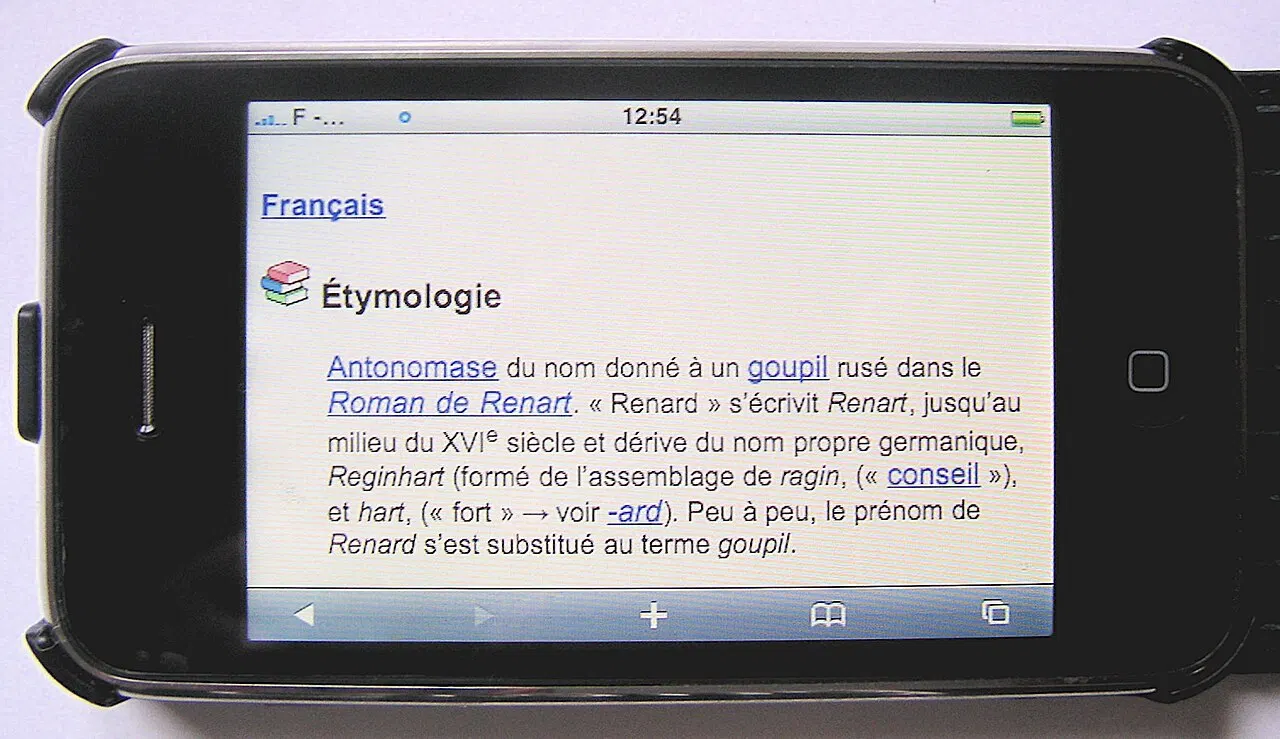
Smartphone displays have evolved dramatically, becoming larger, sharper, more colorful, more efficient, and more immersive. The race to larger screens began with Samsung's Galaxy Note (2011) pioneering the 5.3-inch display. Reduced bezels, taller aspect ratios, and curved displays allowed screens to grow without making devices unwieldy. Apple's "Retina Display" (iPhone 4, 2010) set a baseline for sharpness, while Android manufacturers pushed pixel densities beyond 600 ppi. OLED technology replaced LCDs in flagship devices, offering perfect blacks, vivid colors, and energy efficiency.
High refresh rates (90Hz, 120Hz) made scrolling smoother, and always-on displays changed interaction patterns.
Processing Power: Smartphones Become Supercomputers
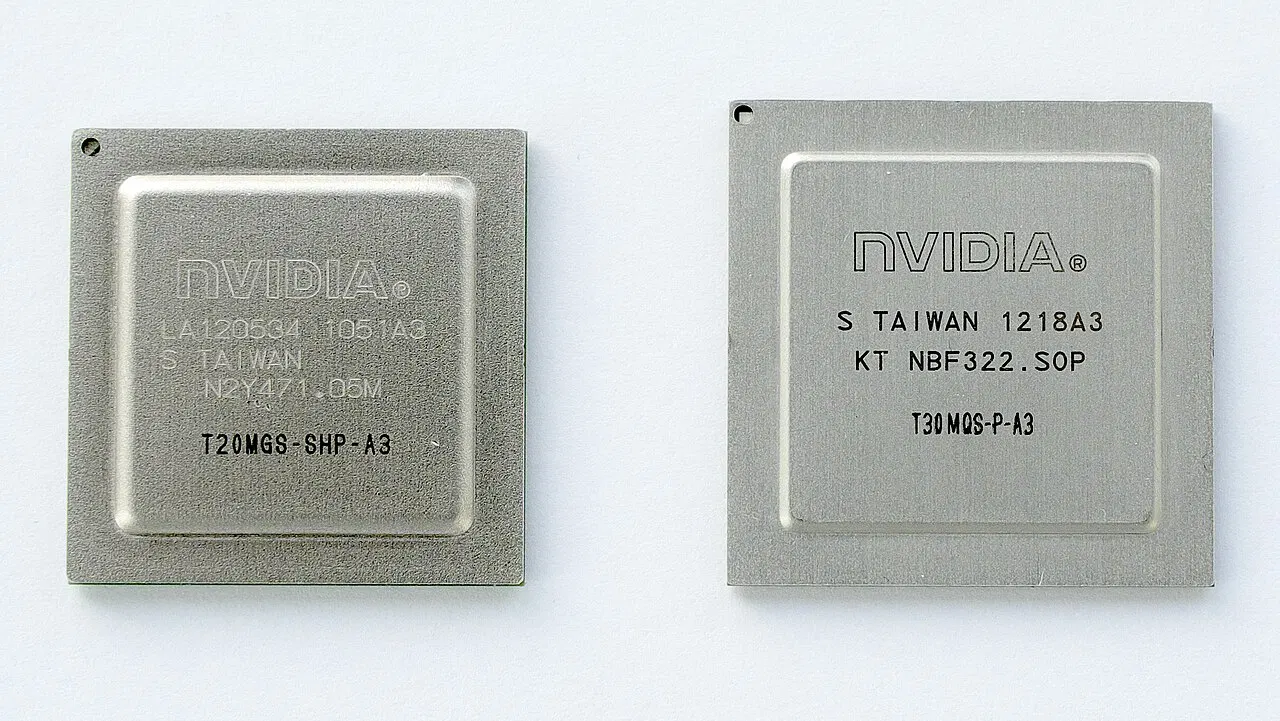
Early smartphones used processors barely more powerful than 1990s desktop computers. Modern flagship smartphones contain processors rivaling or exceeding laptop capabilities. ARM architecture dominates, emphasizing energy efficiency. Leading processor manufacturers include Qualcomm (Snapdragon), Apple (A-series, M-series), Samsung (Exynos), MediaTek, and Huawei (Kirin). Mobile processors evolved from single-core designs to multi-core architectures with specialized co-processors: CPU cores (big.LITTLE), GPUs for graphics, neural engines for AI tasks, image signal processors for computational photography, and secure enclaves for security.
Apple's A17 Pro (2023) includes 19 billion transistors and a 16-core Neural Engine performing 35 trillion operations per second. High-end smartphones now edit 4K video, run sophisticated 3D games, and perform real-time language translation. RAM and storage have also expanded dramatically, with flagships offering 12-16GB RAM and 256GB-1TB storage.
Camera Technology: From Terrible to Revolutionary

Perhaps no smartphone feature evolved more dramatically than cameras. Early smartphone cameras were barely functional—low resolution, poor image quality, no flash. Modern smartphone cameras rival or replace dedicated cameras for most users. The megapixel race quickly escalated from under 1MP to 40MP+, but manufacturers realized that computational photography mattered more than raw megapixel counts. Computational photography uses software and AI to enhance images: HDR combines multiple exposures for better dynamic range; Night mode captures multiple frames over several seconds to reduce noise; Portrait mode uses depth sensing for artificial bokeh; Smart HDR recognizes scenes and adjusts settings automatically; and computational zoom extends effective zoom ranges.
Most flagships now include multiple rear cameras: wide-angle (primary), ultra-wide, telephoto (optical zoom 2x-5x), macro, and depth sensors. Video capabilities evolved from VGA to 4K at 60fps with cinematic modes, HDR video, and advanced stabilization. Smartphone cameras have effectively killed the compact camera market, with standalone camera sales collapsing by over 90% between 2010 and 2023.
Connectivity: From EDGE to 5G and Beyond
Wireless technology evolution dramatically expanded what smartphones could do. 2G offered under 100 kbps data speeds; 3G brought mobile broadband at 384 kbps to several Mbps, enabling the smartphone's rise; 4G LTE transformed smartphones into legitimate mobile internet devices with speeds of 10-50+ Mbps, making HD streaming, video calling, and cloud services practical; 5G promises peak speeds exceeding 1 Gbps with low latency for real-time applications. Wi-Fi standards also evolved from Wi-Fi 4 to Wi-Fi 6E and Wi-Fi 7. Bluetooth enables wireless accessories, NFC powers contactless payments, and UWB in recent flagships provides centimeter-level spatial awareness.
Battery Technology: The Persistent Challenge
Battery technology advanced far more slowly than other components. Lithium-ion and lithium-polymer batteries increased capacity from under 1000mAh to 3000-5000mAh, but power consumption also grew with larger screens, more powerful processors, and additional radios. Power management innovations include OLED display efficiency, processor efficiency improvements (3nm node), software optimization, and AI-powered battery management. Fast charging technologies (Qualcomm Quick Charge, USB Power Delivery, proprietary systems) can restore 50-70% charge in 15-30 minutes. Wireless charging (Qi) became standard, with reverse wireless charging allowing phones to charge accessories.
Battery degradation remains a leading reason for phone upgrades, though manufacturers now implement optimized charging patterns and offer affordable battery replacements.
Security and Biometrics: Protecting Privacy and Identity
Biometric authentication became mainstream with Apple's Touch ID (iPhone 5s, 2013) and Face ID (iPhone X, 2017). Fingerprint sensors evolved from capacitive home buttons to in-display optical and ultrasonic sensors. Face ID uses infrared 3D depth mapping for high security. Other biometrics include iris scanning. Full-disk encryption by default, secure enclaves, and hardware-based security protect sensitive data.
Mobile payment systems (Apple Pay, Google Pay) use tokenization for secure transactions. Recent privacy features include app permission systems, privacy indicators, approximate location sharing, app tracking transparency, and on-device processing to keep data local.
Software Evolution: From Static Systems to AI Assistants
Smartphone software evolved from basic operating systems to sophisticated platforms integrating AI, voice control, augmented reality, and cross-device ecosystems. Voice assistants (Siri, Google Assistant) improved dramatically with natural language processing and machine learning. On-device AI handles photo organization, smart replies, predictive text, battery management, fraud detection, and health monitoring. Augmented reality frameworks (ARKit, ARCore) enable furniture visualization, navigation overlays, gaming (Pokémon GO), education, virtual try-on, and measurement tools. Cross-device ecosystems (Apple's Continuity, Google's Nearby Share) create powerful lock-in effects by seamlessly connecting smartphones, tablets, laptops, watches, and smart home devices.
Form Factor Innovations: Beyond the Glass Rectangle
While most smartphones converged on similar "glass rectangle" designs, manufacturers experimented with alternative form factors. Foldable phones using flexible OLED displays represent the most significant innovation: Samsung Galaxy Fold (unfolds to tablet size) and Galaxy Z Flip (vertical flip). Benefits include larger displays without bulkier devices, but challenges include high costs ($1500-2000+), durability concerns, visible creases, and increased thickness. Dual-screen devices (LG G8X, Microsoft Surface Duo) offered an alternative approach. Modular phones (Google's Project Ara, Motorola's Moto Mods) failed commercially due to engineering complexity and consumer disinterest.
The notch and hole-punch era evolved to address edge-to-edge display challenges, with under-display cameras emerging as the next frontier.
Future Directions: AI, AR, and Beyond
Several clear trajectories shape coming generations. On-device AI processing will enable real-time language translation, advanced computational photography, predictive interfaces, personalized experiences, and health monitoring. Integration of large language models promises more intelligent assistants. Extended reality capabilities will expand, with augmented reality becoming more immersive through improved processors, cameras, and depth sensors. 5G Advanced and 6G will provide ubiquitous high-speed, low-latency connectivity for cloud gaming, real-time collaboration, IoT integration, and edge computing. Satellite connectivity (as pioneered by iPhone 14's Emergency SOS) may expand to general connectivity, ensuring smartphones work anywhere.
Advanced biometric health monitoring may add non-invasive blood glucose monitoring, blood pressure measurement, and mental health tracking. Sustainable design and right to repair movements push for longer software support, repairable designs, recycled materials, and carbon-neutral production. While smartphones currently dominate mobile computing, future form factors such as AR glasses, contact lens displays, or neural interfaces may eventually supersede them, but smartphones will likely remain central for at least another decade.
The smartphone's evolution from niche business tools to ubiquitous personal computers represents one of technology's most consequential transformations. In barely 15 years, smartphones absorbed and replaced numerous standalone devices—phones, cameras, MP3 players, GPS units, portable game consoles, e-readers, and more—becoming unified platforms through which billions access information, communicate, work, learn, shop, navigate, capture memories, and consume entertainment. The smartphone revolution isn't over; it's simply entering its next chapter. Source: Statista Smartphone Market Data.