
Table of Contents
Classical Computing: The Foundation for Understanding Quantum

Before diving into quantum computing, it helps to understand how ordinary computers work. Every device you use—your phone, laptop, or a supercomputer—processes information using bits. Each bit exists in one of two states: 0 or 1. This binary foundation might seem limited, but by combining bits, computers can represent anything from text to video. Eight bits form a byte, which can represent 256 different values.
Modern processors handle billions of bits per second to run everything from spreadsheets to artificial intelligence.
Classical computers solve problems sequentially. If a computer needs to find a name in a database of 1 million entries, it typically checks one entry at a time: entry 1, entry 2, entry 3, and so on until it finds the match. For most everyday tasks, this approach works extremely well, with processors executing billions of operations per second.
But some problems hit a wall. Consider factoring a 200-digit number into its prime factors—a task central to modern encryption. Even checking one trillion possibilities per second, a classical computer would require longer than the age of the universe to test all options. This isn't a problem with engineering; it's a fundamental limitation of how classical computers process information.
Where Classical Computing Reaches Its Limits
Certain problems overwhelm classical computers due to combinatorial explosion, where possibilities multiply exponentially. Optimizing delivery routes for 100 stops involves roughly 9.3 × 10^157 possible solutions—far more than there are atoms in the universe. Classical computers simply cannot check them all. Other areas like molecular simulation, weather modeling, and cryptography also demand computational power that classical machines cannot provide, no matter how fast their processors become.
These limitations aren't about speed. They're fundamental to how classical computing works: checking possibilities one at a time using bits that exist in definite states. Quantum computing offers a radically different approach that, for specific problem types, overcomes these constraints entirely.
Quantum Mechanics: The Physics That Makes Quantum Computing Possible

Quantum computing harnesses phenomena from quantum mechanics, the physics that governs atoms and subatomic particles. These phenomena seem bizarre compared to everyday experience, but they are how nature actually works at its most fundamental level.
The Quantum World Operates Differently
In daily life, objects exist in definite states. A coin is either heads or tails. A light is on or off. At quantum scales, reality works differently. Quantum objects exist in superpositions—combinations of multiple states simultaneously.
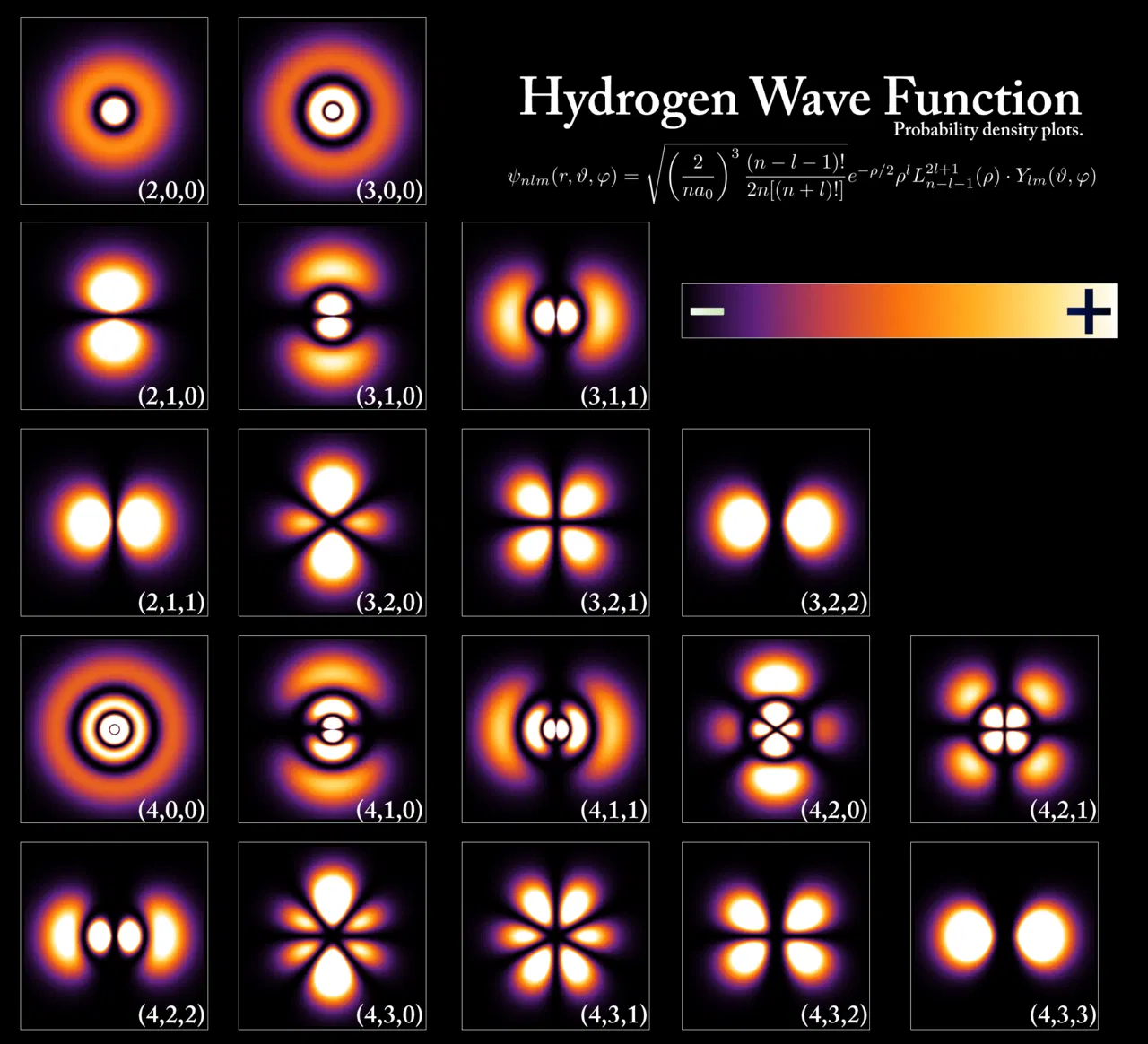
An electron doesn't orbit an atom at one specific location; it exists in a probability cloud, essentially occupying many locations at once until observed. A photon can simultaneously travel multiple paths through an experiment. These aren't gaps in our knowledge—quantum objects genuinely exist in multiple states at the same time, according to quantum mechanics.
This contradicts common sense so thoroughly that even pioneers like Einstein resisted certain implications. Yet quantum mechanics has been tested rigorously for over a century, and its predictions have been confirmed with stunning precision. It is one of the most well-tested theories in all of physics.
Three Key Quantum Phenomena for Computing
Superposition allows quantum objects to exist in combinations of multiple states simultaneously. A quantum particle's position, momentum, or spin exists in superposition until measurement forces it into a definite state. Quantum computers exploit superposition to represent and process many possibilities at once.
Entanglement occurs when quantum particles interact and become correlated in ways where measuring one particle instantaneously affects the other, regardless of distance. Einstein called this "spooky action at a distance" and resisted believing it was real. Yet experiments repeatedly confirm it. Quantum computers use entanglement to create powerful correlations between qubits, enabling coordinated processing that classical systems cannot replicate.
Interference allows quantum probabilities to combine like waves, amplifying some outcomes while canceling others. Quantum algorithms use interference to increase the probability of correct answers while suppressing wrong ones. This wave-like behavior has no classical analog and is essential for extracting useful results from quantum computations.
Qubits: The Fundamental Units of Quantum Information
If classical computing is built on bits, quantum computing is built on qubits (quantum bits). A classical bit can only be 0 or 1. A qubit can exist in a superposition of both 0 and 1 simultaneously. Mathematically, a qubit's state is written as |ψ⟩ = α|0⟩ + β|1⟩, where α and β are complex numbers whose squared magnitudes give the probabilities of measuring 0 or 1. The crucial point is that before measurement, the qubit genuinely exists in both states at once.
The Exponential Power of Many Qubits
A single qubit might seem only slightly more powerful than a bit, but the power of multiple qubits grows exponentially. Two classical bits can represent exactly one of four values at a time. Two qubits in superposition can represent all four values simultaneously. Three qubits represent all eight values at once. With n qubits, a quantum computer can simultaneously represent all 2^n possible states.
Three hundred qubits can represent more states (2^300 ≈ 10^90) than there are atoms in the observable universe (≈10^80).
This doesn't mean 300 qubits store more information than classical bits—measurement collapses the superposition, yielding just one classical outcome. But during computation, quantum algorithms can manipulate all those superposed states simultaneously, providing massive parallelism for certain problems.
How Qubits Are Built
Qubits require physical implementation using real quantum systems. Several competing technologies exist:
- Superconducting qubits use tiny superconducting circuits cooled near absolute zero. Companies like IBM, Google, and Rigetti pursue this approach.
- Trapped ions use individual ions held by electromagnetic fields, with electron energy levels representing qubit states. IonQ and Honeywell are leaders here.
- Photonic qubits use photons with polarization or path representing states. PsiQuantum and Xanadu develop this approach.
- Topological qubits are a theoretical approach using exotic quantum states that would be inherently error-resistant. Microsoft invests heavily here.
Each technology has trade-offs. The "best" qubit type remains unclear, and different approaches may ultimately suit different applications.
Superposition: Computing with Multiple States at Once
Superposition is quantum computing's most distinctive feature—the ability to process many possibilities simultaneously rather than one at a time. Imagine searching for a specific name in an unsorted phone book of 1 million entries. A classical computer checks entries one by one, needing 500,000 checks on average. A quantum computer using Grover's algorithm can find the entry in roughly √1,000,000 = 1,000 steps—a quadratic speedup.
How? The quantum computer creates a superposition representing all 1 million entries simultaneously, then uses quantum operations to amplify the probability of the correct entry while suppressing wrong ones. This isn't magic—the computer still performs operations, and those operations take time. But by processing all possibilities at once, quantum algorithms achieve speedups that are impossible classically for certain problems.
Limitations of Superposition
Superposition comes with trade-offs. Measurement destroys the superposition—when you measure a qubit, you get only one classical outcome (0 or 1) based on probability. You cannot directly observe or extract all 2^n values from n qubits. The no-cloning theorem prevents perfectly copying unknown quantum states, which limits how information can be extracted. Additionally, quantum algorithms must carefully engineer interference so that wrong answers cancel out while correct answers amplify.
Simply creating superposition is not enough.
Entanglement: The Secret Weapon of Quantum Computers
If superposition is quantum computing's most visible feature, entanglement is its most mysterious—and equally crucial. When quantum particles interact, they can become entangled, meaning their quantum states become correlated so that measuring one particle instantaneously affects the other, regardless of distance. For qubits, entanglement means you cannot describe each qubit's state independently. A pair of entangled qubits exists in a shared quantum state where measuring one immediately determines the other's outcome, even across arbitrary distances.
Entanglement provides crucial advantages. It creates correlations impossible with classical systems, enabling operations on one qubit to influence many others simultaneously. It also makes quantum states exponentially complex—an n-qubit system requires 2^n numbers to describe classically, which is why simulating quantum computers on classical machines becomes exponentially difficult. Entanglement also enables quantum error correction, where logical qubits are encoded across multiple physical qubits to detect and fix errors without destroying the quantum information.
Quantum Gates: How Quantum Information Is Manipulated
Just as classical computers use logic gates to manipulate bits, quantum computers use quantum gates to manipulate qubits. But quantum gates work very differently. They are unitary transformations that rotate qubit states while preserving quantum information and maintaining superposition. Unlike classical gates, quantum gates are reversible—you can always run them backward to recover the original state.
Key quantum gates include the Pauli-X gate (quantum NOT), which flips a qubit state; the Hadamard gate, which creates superposition and has no classical analog; the CNOT gate, which creates entanglement between two qubits; and phase gates, which rotate quantum phases crucial for interference. Any quantum algorithm can be built from a small universal set of these gates, much like any classical computation can be built from NAND gates alone.
Quantum Algorithms: What Problems Can Quantum Computers Actually Solve?

Quantum computers are not universally faster. For word processing, web browsing, or video playback, classical computers work perfectly well. Quantum computers excel at specific problems where quantum principles provide fundamental advantages.
Shor's Algorithm: Breaking Encryption
Shor's algorithm, discovered in 1994, was the breakthrough that made quantum computing famous. It solves the integer factorization problem—finding prime factors of large numbers—exponentially faster than known classical algorithms. Modern RSA encryption relies on factoring being extremely difficult for classical computers. While multiplying two large primes is easy, factoring the result would take classical computers longer than the universe's age using known methods. A sufficiently large quantum computer running Shor's algorithm could factor such numbers in hours or days, potentially breaking current encryption systems.
This threat has driven the development of post-quantum cryptography to create encryption resistant to quantum attacks.
Grover's Algorithm: Searching Databases
Grover's algorithm provides a quadratic speedup for searching unsorted databases or finding inputs that satisfy specific conditions. Classically, searching N items requires N/2 checks on average. Grover's algorithm finds answers in roughly √N steps. While the speedup is "only" quadratic, it applies to broad problem classes including cryptographic key search, optimization, and database queries.
Quantum Simulation: Modeling Nature
Perhaps quantum computers' most natural application is simulating other quantum systems. Quantum mechanics governs chemistry, materials science, and fundamental physics, but simulating these systems on classical computers is exponentially difficult. Quantum computers can simulate quantum systems efficiently because they operate using the same quantum principles. Applications include drug discovery, materials design for better batteries and solar cells, chemical reaction modeling for catalyst development, and fundamental physics research.
Optimization and Machine Learning
Many important problems involve optimization—finding the best solution among vast possibilities. Quantum computers might excel at certain optimization problems through algorithms like the Quantum Approximate Optimization Algorithm (QAOA) or quantum annealing. In machine learning, quantum approaches could accelerate training for certain neural network architectures or enable novel algorithms for high-dimensional data. However, practical advantages for real-world problems remain unproven, and this is an active research frontier.
The Challenges of Building Practical Quantum Computers
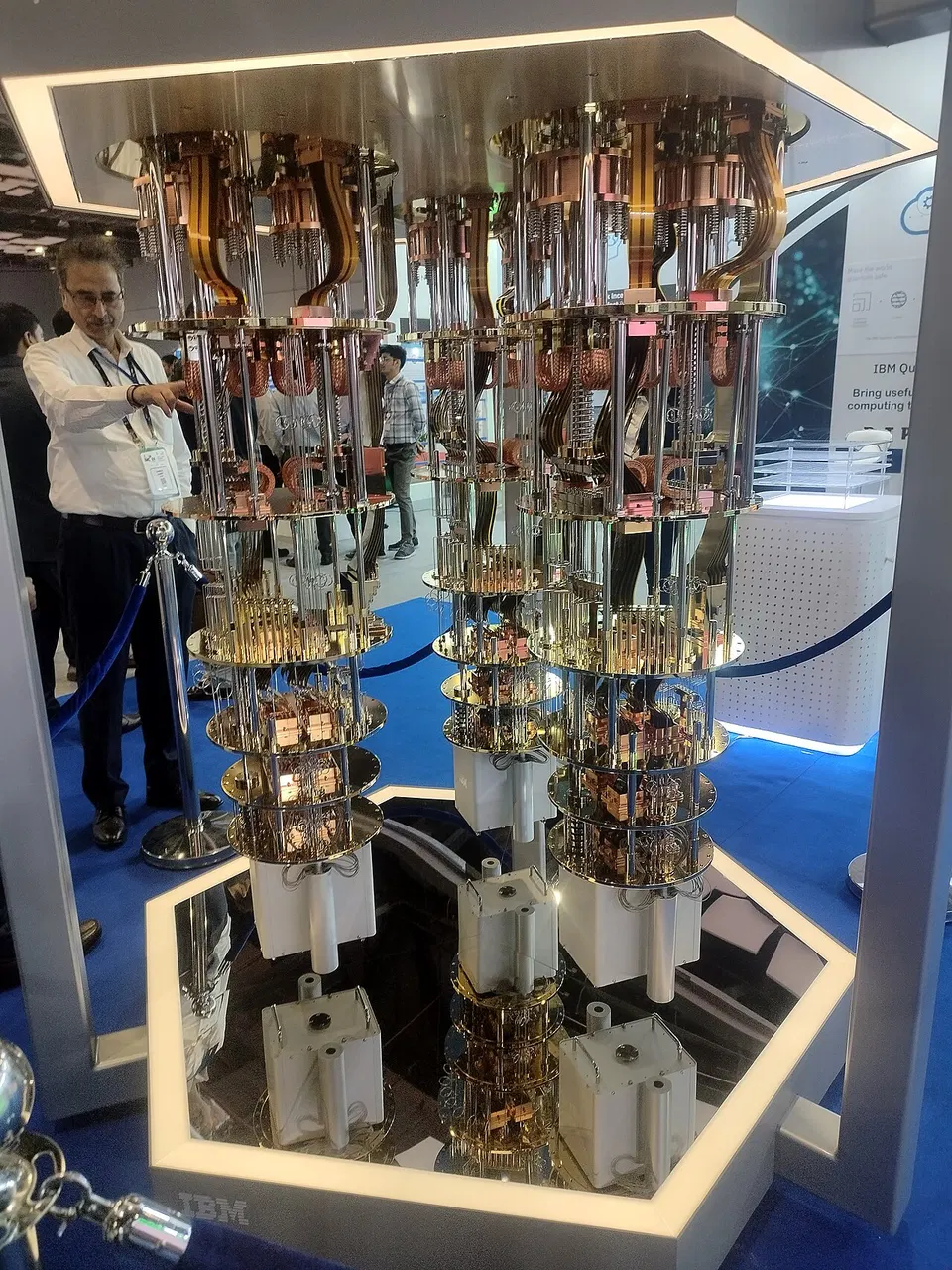
Despite the theoretical power, enormous practical challenges prevent quantum computers from solving most real-world problems today.
Decoherence: The Main Obstacle
Decoherence—the loss of quantum properties through environmental interaction—is quantum computing's primary challenge. Superposition and entanglement are extraordinarily fragile. Any uncontrolled interaction with the environment causes qubits to lose their quantum properties and behave classically. Thermal noise, electromagnetic interference, vibrations, and material impurities all cause decoherence. Current qubits maintain quantum states for only microseconds to milliseconds, requiring extremely fast operations before the quantum information is lost.
Quantum Error Correction
Classical computers handle errors through redundancy. Quantum error correction is far more challenging because measurement destroys quantum information, the no-cloning theorem prevents making backup copies, and errors are continuous rather than discrete. Quantum error correction codes address these challenges by encoding logical qubits across multiple physical qubits, but the overhead is substantial—a single logical qubit might require hundreds or thousands of physical qubits. Current quantum computers are NISQ devices (Noisy Intermediate-Scale Quantum), with 50-1000 qubits and no full error correction, making them error-prone and limited in capability. Fault-tolerant quantum computers with effective error correction remain a major research goal.
Scaling and Engineering
Building quantum computers with thousands or millions of qubits faces immense engineering challenges. Superconducting systems require cryogenic cooling to millikelvin temperatures. Each qubit needs precise control signals, and scaling to millions of qubits requires solving massive signal routing challenges without interference. Manufacturing many identical qubits with consistent properties demands atomic-scale precision.
The Current State of Quantum Computing
Despite the challenges, quantum computing has made remarkable progress. In 2019, Google's Sycamore processor achieved a milestone called "quantum advantage"—performing a specific calculation impractical for classical supercomputers. While the problem was artificial, it demonstrated that quantum computers can surpass classical machines for some tasks. IBM offers cloud access to quantum computers through IBM Quantum, allowing researchers and students to run algorithms on real hardware. Numerous companies and governments worldwide are investing billions in quantum computing research.
Today's quantum computers can perform simple algorithms on tens to hundreds of qubits, simulate small molecules, and demonstrate quantum advantage for benchmark problems. They cannot yet factor large numbers, solve most real-world optimization problems, or run long algorithms without errors overwhelming results. We are in the early stages—analogous perhaps to the 1950s for classical computing—where the technology shows promise but has not yet transformed practical computing.
The Future: When Will Quantum Computers Become Practical?
Predicting timelines is difficult, but reasonable expectations suggest that within 5-10 years, quantum computers with hundreds to thousands of qubits will demonstrate advantages for useful problems, particularly in quantum simulation and optimization. Within 10-20 years, we may see the first fault-tolerant quantum computers beginning to impact drug discovery, materials science, and chemistry. Beyond 20 years, large-scale quantum computers could transform fields including finance, artificial intelligence, and secure communication. These timelines are speculative—breakthroughs could accelerate progress, while unforeseen obstacles could cause delays.
Why Students Should Care About Quantum Computing
Even if practical quantum computers remain years away, studying quantum computing offers real benefits. It provides practical context for quantum mechanics, making abstract physics more concrete. Learning to design quantum algorithms develops fundamentally different thinking skills compared to classical programming—mental flexibility that is valuable across many domains. Students who learn quantum computing now position themselves for emerging career opportunities in academia, industry, and government. Organizations like IBM Quantum offer free cloud access to real quantum hardware and educational resources, making it possible for anyone with internet access to start learning today.
Getting Started: Hands-On Learning
Quantum computing is not just theoretical—students can program quantum computers today. IBM Quantum Experience provides free access to real quantum computers via the cloud, with visual interfaces and the Qiskit Python framework. Microsoft Azure Quantum and Amazon Braket offer access to quantum hardware from multiple providers. Learning resources include courses on Coursera and edX, YouTube tutorials, interactive textbooks, and quantum computing competitions. Programming frameworks like Qiskit, Cirq (Google), and Q# (Microsoft) allow students to write quantum algorithms, simulate quantum chips, and understand concepts through hands-on coding.
The quantum revolution is happening now. Understanding quantum computing means recognizing that computation is not limited to sequential processing of definite bit values. It means appreciating that quantum mechanics—however counterintuitive—describes reality accurately, and those bizarre features can be exploited technologically. Students learning quantum computing today are learning to speak the language of a future where we compute not just with bits, but with the quantum fabric of reality itself.